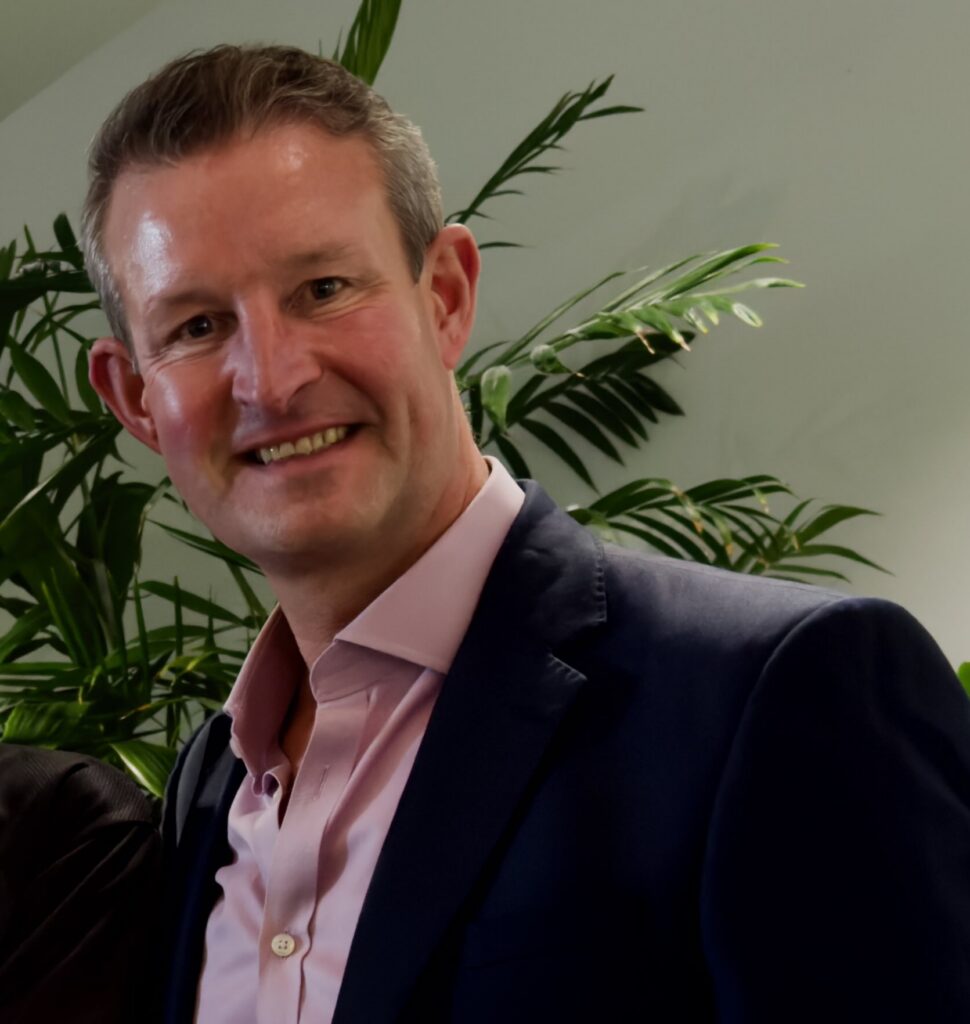
About Chris Thomas

Chris brings a wealth of experience in government liaisons and protected area management, especially in northern Queensland and for the Great Barrier Reef. In South Australia, his work focused on tourism management, where he led numerous effective programs (including on Kangaroo Island) that delivered joint conservation and tourism benefits. 

CONNECT WITH NPAQ

CEO Report

Read all about NPAQ’s monthly activities—from advocacy to Parks Connect to future planning—directly from our CEO.

July marks the start of the new financial year, and the chance for NPAQ to confirm its work priorities and budget for the year ahead.

This year, we’ll be focusing on:

  • fundraising

  • advocacy for protected area expansion and improved management

  • bolstering our strategic alliances

  • supporting the Government’s commitment to an additional 150 Park Rangers, and

  • continuing to deliver our Parks Connect Program in South East Queensland.

Thank to the donations we received during our End of Financial Year appeal, we’ll also be upgrading our website—something we’ve been wanting to do for some time. We recently engaged a contractor to assist us with this upgrade, which will unfold gradually over the coming months.

At the recent NPAQ Special General Meeting on 21 July, members attending (or by proxy) were asked to vote on a proposed amendment to the NPAQ Rules to enable a sitting president more than six consecutive years in office, should they be fairly elected to do so. The motion was carried 19 votes to 4 and has immediate effect. The next vote will be at our Annual General Meeting on Saturday 10 October, where several vacancies on Council will become available, including President, Secretary, Treasurer and Councillor. More information about these vacancies and our AGM will be circulated in the coming month.

Also at our recent Special General Meeting, Susanne and I gave a presentation on our recent achievements, upcoming priorities and the results of the annual Members Survey, as well as an overview of the Wendy & Clif Bell Legacy Project. You can review the presentation here.

Thanks to a generous living bequest from our longest-serving member, Wendy Bell (also on behalf of her late husband, Clif Bell), we’ll be embarking on a four-year legacy project to produce a comprehensive image library and NPAQ Centenary Book, available for public sale in 2030 (discounted for NPAQ members). I will be sharing further information about the project in future issues of Connected.

Last month, I mentioned that the State Budget, handed down on 23 June would deliver wins for the Great Barrier Reef, wins for National Parks and other protected areas, and wins for local communities and visitors to our great state.

Since then, there have been a series of announcements, which may be of interest, including:

There has also been an announcement in support of Queensland landholders who want to protect important wildlife habitats on their land, which you can read about here: Crisafulli Government backs landholders to conserve Queensland’s natural habitat. NPAQ supports the use of private protected areas to complement Queensland’s National Parks and other public protected areas.

NPAQ also welcomed the recent decision by the Gold Coast City Council to discontinue further work on the Springbrook cableway, leaving the project to be externally proponent-led from this point on. NPAQ has been part of a 15-member community alliance, the Respect Springbrook Mountain Alliance, advocating against a cableway to Springbrook on multiple, evidence-based grounds. You can read our media release here.

That’s my CEO wrap for July. As always, we encourage you to engage and become more directly involved in NPAQ activities. Feedback on all operational and protected area topics is also welcome, so please feel free to contact us.

Chris Thomas
NPAQ Chief Executive Officer
Read more reports from 2026


June 2026

June is always a busy month for NPAQ, with Queensland Environment Day early in the month, the launch of our End of Financial Year Appeal and preparations for our 2025–26 financial year audit. This year, we chose to run a very targeted appeal, seeking funding to help mend our website.
 
For several years, we’ve been submitting grant proposals seeking $25,000 to build a state-of-the-art website. Each time, our proposals have gone unfulfilled, so we decided to mend our website instead, working with what we have, crafting it to meet our long-term goal of better connection, more protection, and more persuasive content for Queensland’s National Parks and the people who cherish them.
 
We set ourselves a more modest target of $12,000, and we’re delighted with the response! In total, we raised just over $17,000 in June, with generous donations from a range of members and supporters. Our sincere thanks to everyone who donated. I look forward to showcasing what we can achieve with this funding boost on our website in the coming months. 

On the topic of funding boosts, the State Budget handed down on 23 June also delivered wins for the Great Barrier Reef, wins for National Parks and other protected areas, and wins for local communities and visitors to our great State. That’s the fifth budget in a row to deliver meaningful investment in Queensland’s protected areas. Of course, more investment is always needed, but progress is progress!
 
The State Budget responded to the priorities set out in NPAQ’s Advocacy Plan and our joint QTCA State Budget Submission, including additional funding for continued land acquisitions, State Forest transfers, Park Rangers, visitor infrastructure and community engagement. Four of our five World Heritage Areas also attracted specific investment. We were pleased to share this news via a press release and communications to our membership/supporters. I’ve since received a letter from Minister Powell summarising the budget highlights and acknowledging the important role NPAQ plays in conserving and enhancing Queensland’s environment. You can read the letter in full here.
 
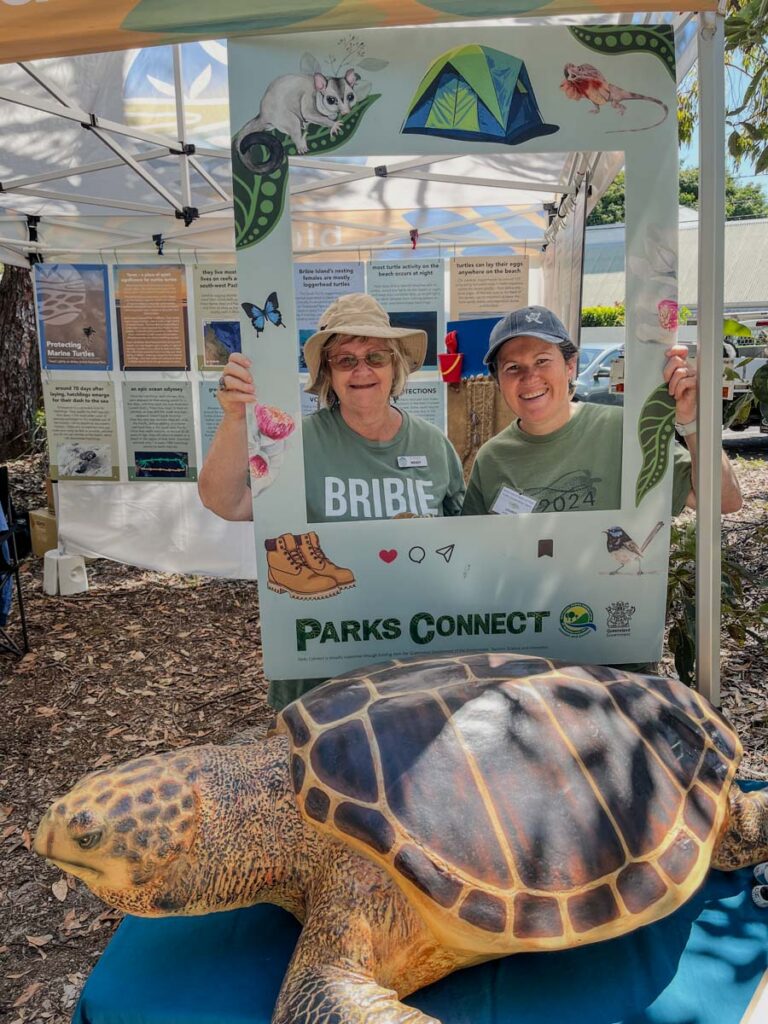
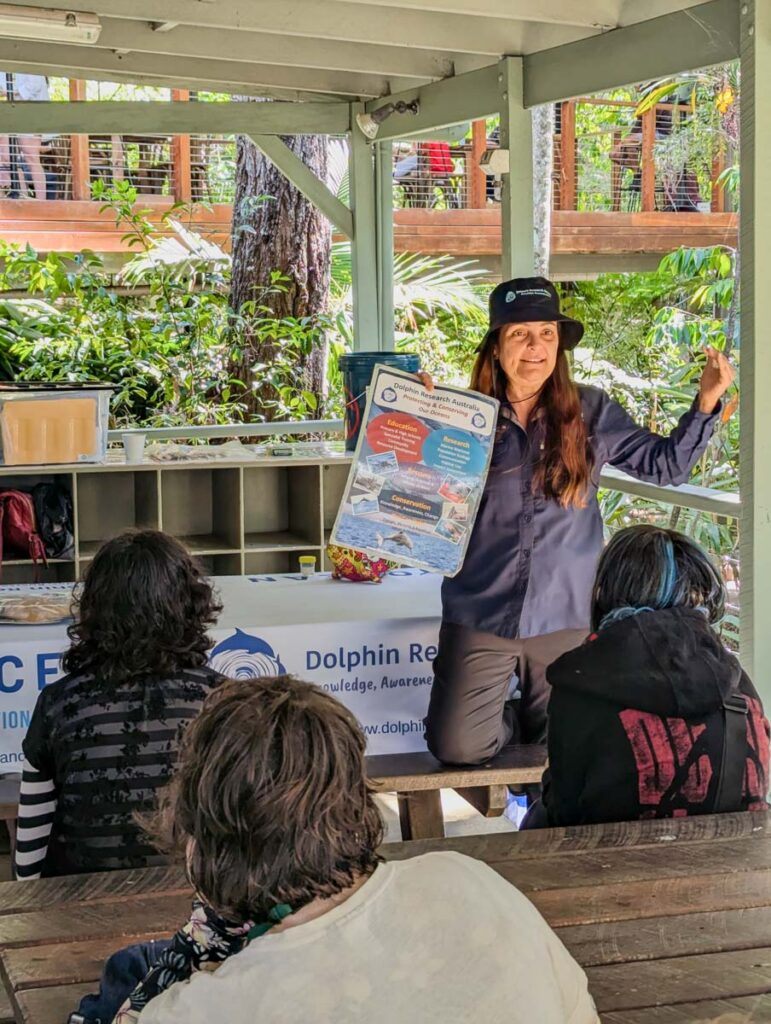
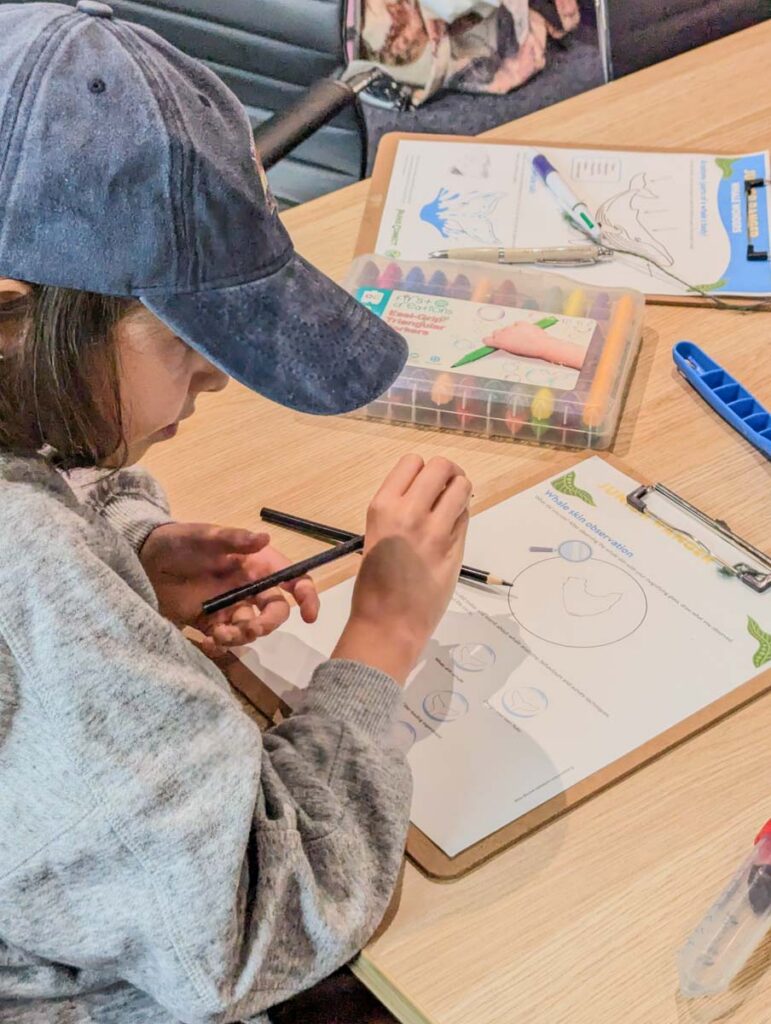
During June, we also submitted a funding proposal to the Department of the Environment, Tourism, Science and Innovation (DETSI) to continue our Parks Connect Programs for a further 12 months (contract ending September 2027). Parks Connect has now been running for 15 months throughout South East Queensland and continues to attract positive feedback from kids, families, Park Rangers, volunteers, presenters and other community members who get involved. No two months are the same, and that’s part of its charm!

In June, we ventured out to Main Range Conservation Park for our first afternoon/evening program with the option to camp overnight. This month, we’re excited to visit historic Fort Lytton National Park for our Park of the Month open day on 31 July, showcasing some of the amazing built heritage our local National Parks preserve. Check out our website for details.
 

As always, we encourage you to engage and become more directly involved in NPAQ activities. Feedback on all operational and protected area topics is also welcome, so please feel free to contact us.
 
Chris Thomas
NPAQ Chief Executive Officer
April/May 2026

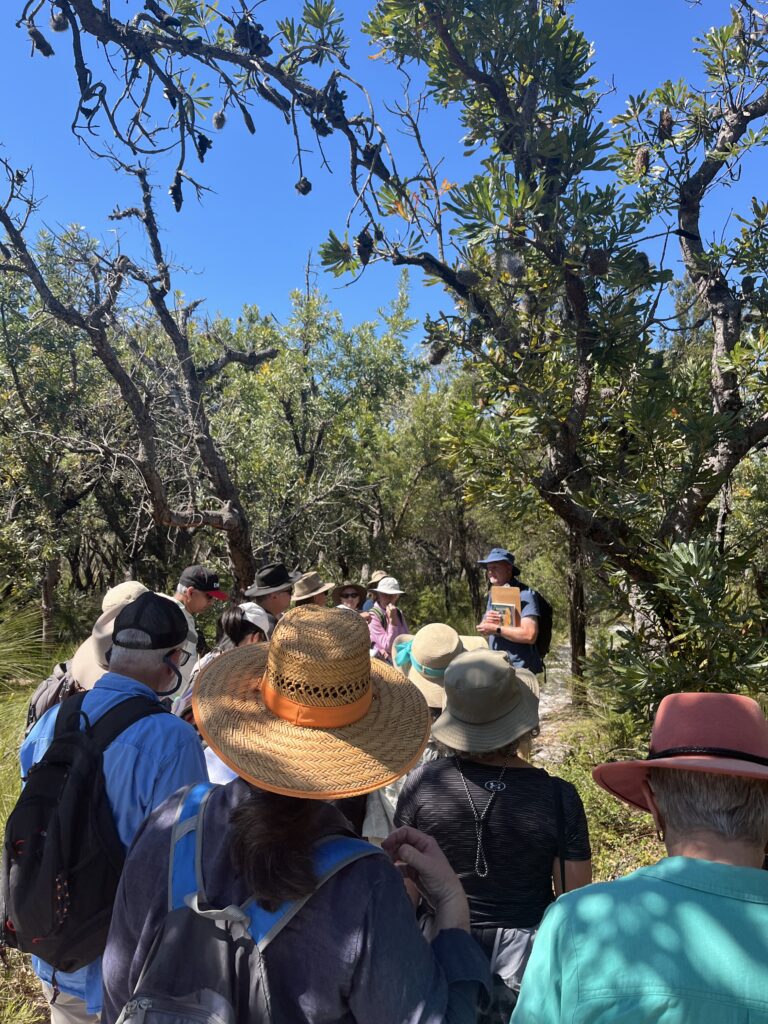
April and May were very busy months for NPAQ, with the continuation of our Junior Ranger and Cadet Ranger programs from QPWS Gateway Visitor Centres and our successful Park of the Month program — at Tamborine National Park in April, and at Venman Bushland National Park in May. We’re excited to venture out a bit further in June, to Main Range Conservation Park (Glen Rock/Casuarina Day Use Area), from 1:00 pm to 8:30 pm on Saturday 27 June. Check out our website for details.
 
Fortunately, I got to spend Easter on Minjerribah (Stradbroke Island) and took the opportunity to visit Naree Budjong Djara NP, including the 3.2-km hike up the Mount Bippo Penbean (mountainous country) track to take in the stunning vistas south over Minjerribah’s heath-covered sand dunes. Naree Budjong Djara NP has been jointly managed by the Quandamooka people and the Queensland Parks and Wildlife Service (QPWS) since 2011 and accounts for about 50% of the island. It’s a beautiful place, if you ever get the chance to visit.
 
We also celebrated National Volunteer Week in May and took the opportunity to thank everyone who devotes their time to NPAQ! Whether:
🥾 Volunteer Rangers sharing knowledge out in the parks
👧 Junior and Cadet Ranger Volunteer Assistants helping kids fall in love with nature
🌱 Vegetation management volunteers revegetating D’Aguilar National Park
🔬 Activity leaders running citizen science projects and leading bushwalks
📋 Committee members advocating for Queensland’s national parks
📸 Communications volunteers helping with photography, archiving, and spreading the word …

You’re the reason we achieve what we do! Thank you. We also couldn’t do what we do without the generosity of our members and supporters. Today, during Philanthropy Week and on Queensland Environment Day, we ask you to dig deep for nature with the launch of our 2026 EOFY donation drive, which will greatly help increase NPAQ’s reach and position us for greater advocacy and connection opportunities into 2027 and beyond.
 
On a disappointing note, we’ve been reflecting on the latest Federal Budget and analysis by the Biodiversity Council, which states that funding for biodiversity programs is low and falling, at a time when it should be increasing. Compared to the 2025–26 actual spend, after considering inflation, the funding commitment is 9% less in 2026–27 and 46% less in 2028–29 (just 0.04% of the budget). For more detail, read the Biodiversity Council’s budget analysis.
 
We have since signed on (with a number of other organisations) to a joint letter to the Federal Government. The letter:

  • expresses disappointment at the inadequate biodiversity investment in the 2026 budget for next and future years
  • highlights that this (not just housing) is an intergenerational equity issue
  • highlights the importance of nature to the economy, human health, and culture; and
  • calls for funding to be lifted to 1% of the budget.

 
We’ll also be looking carefully at the upcoming State Budget on 23 June and hoping it delivers significant funding for nature and the environment. I’ll share more information about this in our next Connected

I also recently had the privilege of attending the 3-day Minister’s Environmental Round Table (MERT), and the launch celebration for the 2nd annual Queensland Environment Day, which is today — 5 June 2026 — a day to celebrate our State’s environment and give a little back to nature. 
 
Of course, NPAQ continues to advocate for and support improvements to Queensland’s protected areas estate, through both land acquisitions, land conversions and management planning. To that end, we welcomed the recent declaration of a third Special Wildlife Reserve for Queensland. The 229,000-hectare Pilungah Special Wildlife Reserve, southwest of Mt Isa, is owned by Bush Heritage Australia and is a refuge for many species of threatened plants and animals. The region supports migratory waterbirds and long-dormant floral species, contains fossil sites and has one of the world’s most diverse reptile communities. This declaration means the Special Wildlife Reserve,  formally known as Cravens Peak Nature Refuge, is now protected forever from other land uses such as mining. It also adds to Queensland’s other special wildlife reserves: Edgbaston Special Wildlife Reserve and Pullen Pullen Special Wildlife Reserve.
 
As always, we encourage you to engage and become more directly involved in NPAQ activities. Feedback on all operational and protected area topics is always welcome, so please feel free to contact us.
 
Chris Thomas
NPAQ Chief Executive Officer
Feb/Mar 2026

February and March have been busy months for NPAQ, with the recommencement of our Junior Ranger and Cadet Ranger programs from gateway visitor centres and the continuation of our Park of the Month program – at Currimundi Lake Conservation Park in February and Samford Conservation Park in March. Both events were very successful, with good community interest and positive feedback from attendees. They were also well supported by some of our dedicated Volunteer Rangers, without whom we would struggle to run our Park of the Month program. I’d like to take this opportunity to thank all of our volunteers, who greatly assist us in delivering our expanding work program.
 
On the topic of our work program, our Council has been putting the finishing touches on our new Strategic Plan 2026–2028 and 2026 Business Plan. I took the opportunity at our recent Members Meeting on 31 March to present an overview of our new Strategic Plan and some of the business priorities for 2026. You can see a copy of my presentation HERE.
 
In summary, our business priorities for 2026 include:

  • establishing a Fundraising Committee to help grow our revenue
  • advancing the Tourism and Conservation Alliance and the Protect Beautiful Queensland Alliance
  • collaborating with the Queensland Ranger Association, Australian Workers Union and Friends of Parks Queensland
  • exploring options for achieving the Minister’s 1% protected area growth target (which is an additional 1.88 million hectares by October 2028)
  • exploring options for better management of World Heritage Areas and Recreation Management Areas
  • identifying opportunities for ecotourism and recreation in SEQ state forests, avoiding areas of high conservation
  • monitoring the Minister’s commitment to 150 additional Park Rangers
  • continuing the Junior, Cadet and Volunteer Ranger programs
  • continuing the Park of the Month program
  • developing a proposal for a Ranger Academy to better support Ranger recruitment, training and retention.

 
I look forward to sharing more information about these priorities in future editions of Connected.
 
Of course, NPAQ continues to advocate for and support improvements to Queensland’s Protected Area Estate, through land acquisitions, land conversions and management planning. To that end, NPAQ welcomed various amendments to Queensland’s forestry and protected areas endorsed by the Governor in Council on 19 March 2026. This included amendments to Callide Timber Reserve; Dhuny Yumba (Home of the Wombat) National Park (scientific); Raine Island National Park (scientific); Boodjamulla (Lawn Hill) National Park; Curtis Island National Park; Mariala National Park; Molle Islands National Park; Broad Sound Islands Conservation Park; Curtis Island Conservation Park; Doonan Creek Conservation Park; Pilungah Special Wildlife Reserve; Cravens Peak Nature Reserve; Ironstone Nature Refuge; Misty Mountain Nature Refuge and Seven Hills Nature Refuge. You can read more about these amendments HERE. We eagerly await further amendments in line with the Minister’s 1% protected area growth target.
As always, we encourage you to engage and become more directly involved in NPAQ activities. Feedback on all operational and protected area topics is also welcome, so please feel free to contact us.
 
 
Chris Thomas
NPAQ Chief Executive Officer